Salmon are in the 1% of fish species worldwide that move between fresh water (streams) and saltwater environments (ocean). To survive, their body changes shape and color their gills and organs, for example, kidneys also adjust. Atlantic salmon are found in the northern Atlantic Ocean and in rivers that flow into it. Most populations are anadromous, hatching in streams and rivers but moving out to ocean to grow. The energy content and abundance of food in the ocean is much higher than in freshwater, so fish can grow very big, very quickly, after which the adults seasonally move upstream again to lay their eggs.
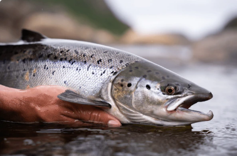
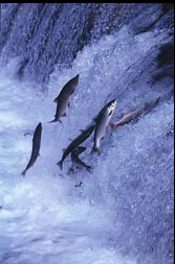
Salmon can return with uncanny precision to the natal river where they were born, and even to the very spawning ground of their birth. It is thought that, when they are in the ocean, they use magnetoreception to locate the general position of their natal river, and once close to the river, that they use their sense of smell to locate the river entrance and even their natal spawning ground. This challenging swim from the ocean to home stream is known as the Salmon Run happening once a year when the water is high enough. Watch the videos below to see the impressive Salmon Run and some of the challenges the fish are faced with (such as Grizzly Bears) to make it home.
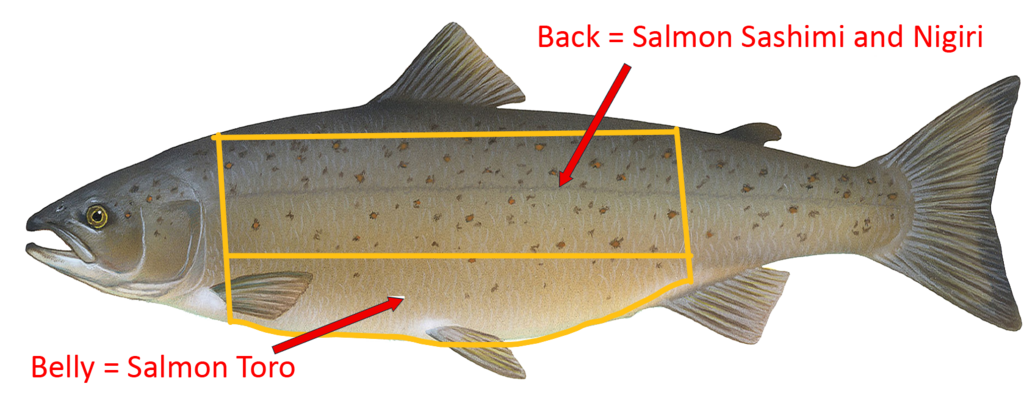
The Salmon Toro comes from the belly of the Salmon which has more fat.
The Salmon served as Sashimi and Nigiri come from the back of the Salmon.
Salmon is good source of protein, potassium, Vitamin D and Omega – 3 fatty acids.